
Introduction
Families often notice the change slowly. A parent avoids a favourite food, stops smiling in photos, or never mentions a sore tooth because they do not want to be a bother. Good dental care for elderly patients matters more than most people realise, because oral health shapes how well someone eats, speaks, sleeps and feels about themselves.
This guide covers the oral health problems that appear most often with age, how to manage them at home, and when a dentist needs to step in.
Why Oral Health Changes With Age
Teeth wear down after decades of use, gums recede, and saliva production often falls. Many older adults take several medications, and a number of them cause dry mouth. Arthritis, tremors or memory loss can make brushing harder. Dentures and bridges add another layer of upkeep. Dental care for elderly patients has to account for all of this rather than repeating the advice given to a thirty year old.
Common Oral Health Problems in Older Adults
Dry Mouth
Saliva washes away food and neutralises acid. With less of it, cavities form faster and the mouth can feel sticky or sore. Sipping water through the day, using a saliva substitute and asking the doctor whether a medication can be adjusted all help.
Gum Disease
Red, swollen or bleeding gums point to gum disease. Left alone, it loosens teeth and can lead to tooth loss. It also tends to be harder to control in people with diabetes, so early treatment matters.
Decay and Root Cavities
As gums recede, the softer root surface becomes exposed and decays quickly. Fluoride toothpaste and regular checkups catch these cavities before they turn painful.
Denture Problems
Dentures that slip or rub, cause sores and make eating unpleasant. The jaw changes shape over the years, so a denture that fitted well once may need relining or replacing.
Oral Cancer
Mouth cancer becomes more common with age. A sore, lump or white patch that does not heal within two weeks needs examination.
Managing Oral Health at Home
Build a Simple Daily Routine
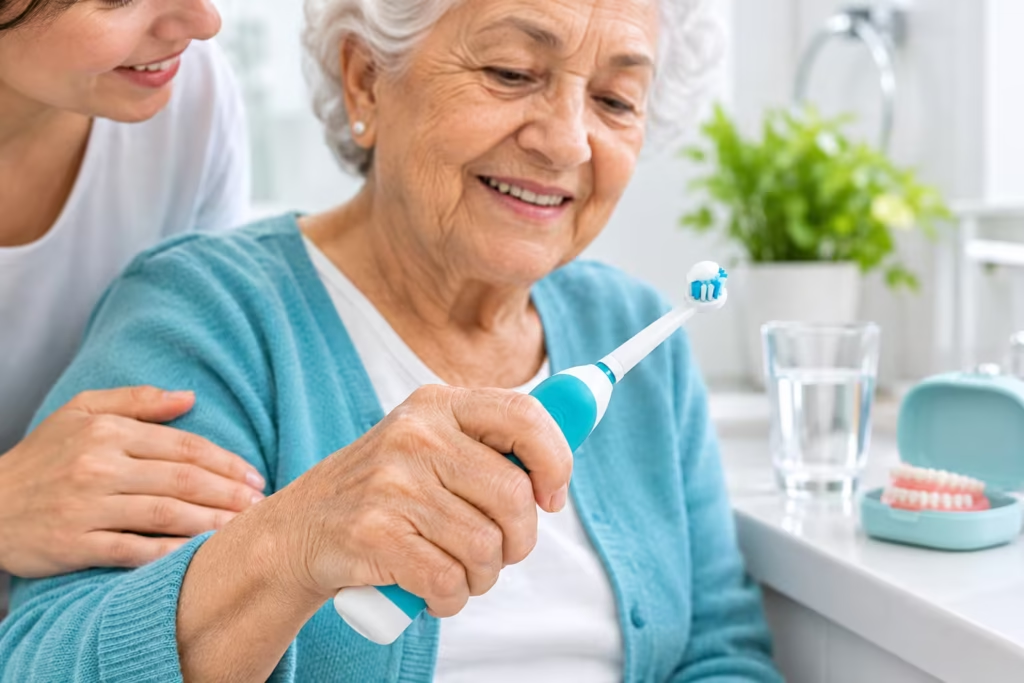
Brush twice a day with fluoride toothpaste and clean between the teeth once daily. An electric toothbrush or a brush with a thicker handle is easier to grip. Dentures should come out at night, get brushed with a soft brush and a non abrasive cleaner, and rest in water.
Support a Parent Without Taking Over
If a parent has memory loss or limited movement, stay beside them and guide the routine rather than doing everything yourself. Break it into steps and keep the same time each day. Look inside the mouth now and then for swelling, white patches or food trapped under dentures. Consistent dental care for elderly patients at home prevents many problems from reaching the clinic.
Watch Food and Drink
Sweet tea sipped all day does more harm than one dessert after a meal. If chewing hurts, soft foods can help for a while, but the cause of the pain still needs a dentist.
When to See a Dentist
Regular Checkups
Most older adults benefit from a visit every six months, though a dentist may suggest a different schedule. These visits include a gum check, an oral cancer screen and a review of any dentures.
Signs That Need Prompt Attention
Book an appointment soon if your parent has tooth or jaw pain, swollen gums, loose teeth, difficulty swallowing, a mouth sore lasting more than two weeks, or dentures that no longer fit. Choose a clinic experienced in dental care for elderly patients, one that explains each step and does not rush.
Conclusion
Healthy teeth and gums help your parents eat well, speak clearly and stay comfortable. Most problems are easier to treat when caught early, and a steady home routine supported by regular visits goes a long way.
Contact 21st Century Medicare Polyclinic to book a check up or discuss your parent’s needs with a dentist who understands dental care for elderly patients. Call or message the team today and take the first step toward a more comfortable mouth for someone you love.
Also Read: Aging Smiles: Why Elderly Patients Need a Different Kind of Dental Care
Frequently Asked Questions
1. Why do older adults get more cavities?
Dry mouth is a major reason, since less saliva means less protection against acid. Receding gums also expose the root surface, which decays more easily than enamel. Years of wear and older fillings that have started to break down add to the risk.
2. How often should an elderly parent visit the dentist?
Every six months suits most people. A parent with gum disease, dentures, dry mouth or a health condition such as diabetes may need to go more often, and the dentist will advise on that after an examination.
3. Can poor oral health affect general health?
Yes. Gum disease is linked with diabetes control and heart conditions, and bacteria from the mouth can be inhaled into the lungs, which raises the risk of chest infections in frail older adults. Keeping the mouth clean supports health beyond the teeth.
4. How can I help a parent with dementia brush their teeth?
Stay calm, use the same routine each day and show the steps by doing them alongside them if needed. Use a soft brush, a small amount of toothpaste and short sessions. If they resist, try a different time of day rather than forcing it, and tell the dentist so they can suggest other options.
5. How should dentures be cleaned?
Remove them after meals if possible and rinse. Brush them daily with a soft brush and a denture cleaner, since regular toothpaste can scratch the surface. Leave them out at night in water or a soaking solution, and clean the gums and tongue with a soft toothbrush too.
6. Does someone with full dentures still need dental checkups?
Yes. The dentist checks for oral cancer, sore patches, infections and changes in how the dentures fit. A poor fit can cause sores and make eating difficult, and it is easier to correct early.
7. What helps with dry mouth?
Sip water regularly, chew sugar free gum and use a saliva substitute or a mouth rinse designed for dryness. Avoid alcohol based mouthwash, which can dry the mouth further. If medication is the cause, speak to the doctor before changing anything.
8. Is dental treatment safe for people with heart conditions or on blood thinners?
Usually it is, with planning. Tell the dentist about every medication and health condition before treatment. The dentist may take extra steps to control bleeding or consult your parent’s doctor, and your parent should not stop any medicine without medical advice.
9. What are the signs of oral cancer?
Watch for a sore that does not heal in two weeks, a lump, a red or white patch, persistent pain, numbness, or difficulty chewing or swallowing. These signs are not always cancer, but each one should be checked promptly.
10. What should I look for in a dentist for my elderly parent?
Look for patience, clear explanations and experience with dental care for elderly patients. Ask whether the clinic is easy to reach, whether appointments can be longer, and whether the team coordinates with your parent’s doctor when needed.