Introduction
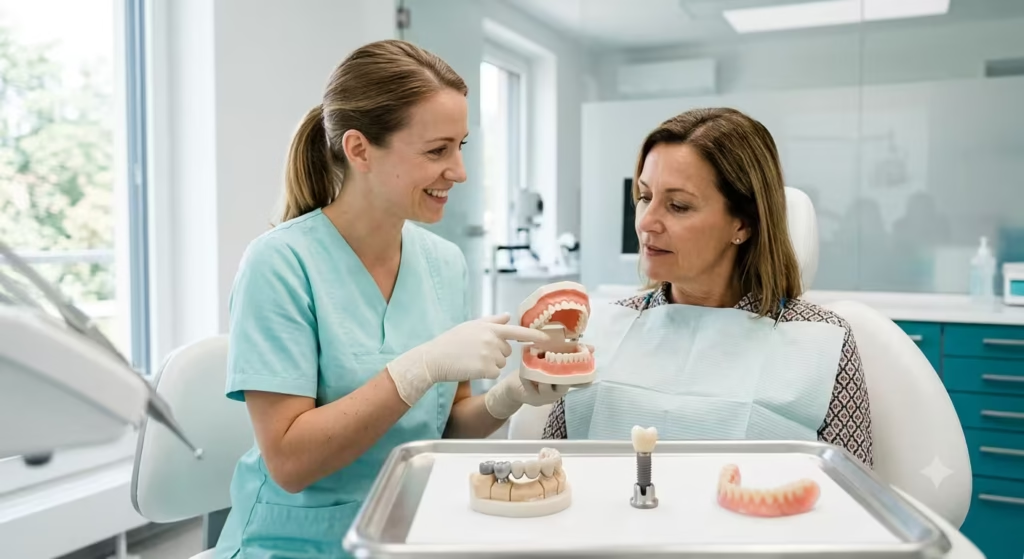
Losing a tooth changes more than your smile. Chewing gets harder, speech can shift and the teeth around the gap begin to move. Most people then face the same three options: a bridge, an implant or a denture. If you are weighing a dental bridge in Dubai against the alternatives, it helps to understand how each one works and what it asks of you.
This guide compares them on lifespan, comfort, upkeep and suitability so you can talk to your dentist with clear questions.
Why Replacing a Missing Tooth Matters
A gap lets neighbouring teeth tilt into the space and the opposing tooth drift downward. Bone under the empty socket slowly shrinks because it no longer carries chewing forces. Replacing the tooth protects your bite, your jaw and your ability to eat comfortably.
Dental Bridges
How a Bridge Works
A bridge fills the gap with an artificial tooth held in place by crowns on the teeth either side. The teeth that support it are shaped to take the crowns, so they need to be healthy and strong. Treatment usually takes two or three visits over a few weeks.
Strengths and Limits
A bridge is faster than an implant and does not need surgery. It feels fixed and looks natural. The drawback is that healthy neighbouring teeth must be reduced to hold it, and if a supporting tooth fails the whole bridge is affected. Cleaning underneath requires special floss or small brushes. With good care, many bridges last 10 years or more, though some need replacing sooner. A dental bridge in Dubai suits people who want a fixed solution without surgery and who already have crowns or large fillings on the adjacent teeth.
Dental Implants
How an Implant Works
An implant is a small titanium post placed in the jawbone to act as an artificial root. A crown is attached on top once the post has fused with the bone. The process takes several months because healing must be complete before the final crown goes on.
Strengths and Limits
Implants do not affect neighbouring teeth, and they help preserve the jawbone. They feel and function much like natural teeth and often last decades with good care. They also cost more upfront, involve surgery and need enough healthy bone. Smoking, uncontrolled diabetes and gum disease raise the risk of failure, so your general health is assessed first. Bone grafting may be needed if the jaw has thinned.
Dentures
Partial and Full Dentures
A partial denture replaces some teeth and clips onto the ones that remain. A full denture replaces an entire arch and rests on the gums. Both are removable.
Strengths and Limits
Dentures cost less than the other options and need no surgery, which makes them suitable for people with several missing teeth or limited bone. They can feel bulky at first, and they may move while eating or speaking. Since they sit on the gum, the jawbone beneath continues to shrink, so the fit changes and adjustments or replacement are needed every few years. Daily cleaning and soaking overnight are part of the routine. Some patients combine dentures with implants for a firmer hold.
How to Choose the Right Option
Questions to Ask Yourself
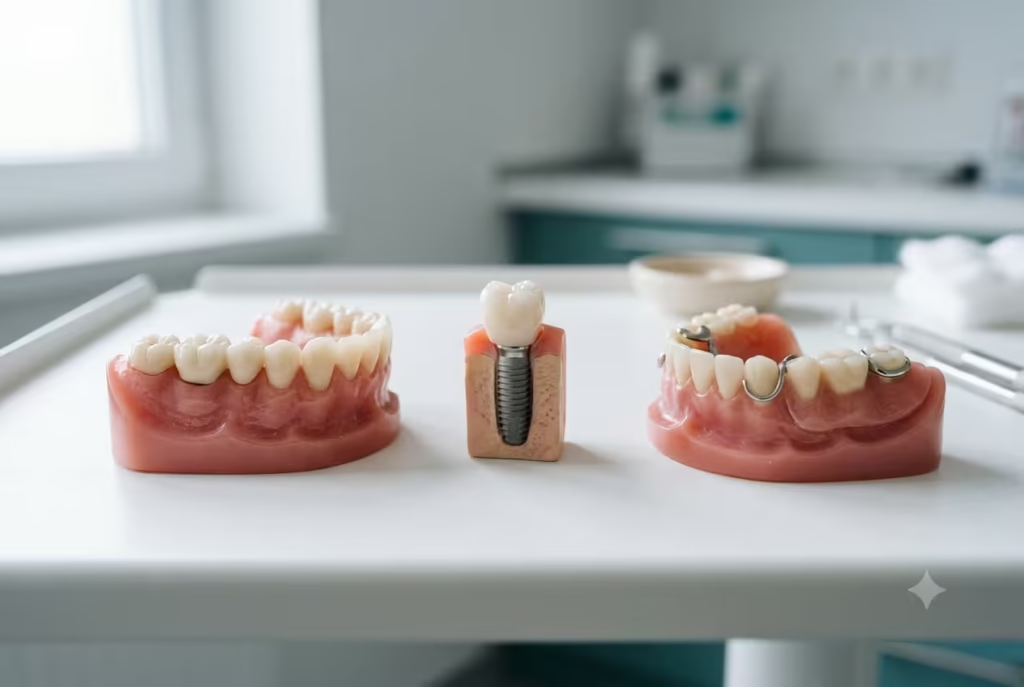
The best choice depends on a handful of factors. How many teeth are missing, and where? A single gap between healthy teeth suits an implant or a bridge, while several missing teeth in a row may point to a bridge, a partial denture or multiple implants. What is the condition of your gums, bone and neighbouring teeth? How much time and money can you commit? Are you comfortable with surgery?
If your adjacent teeth are already heavily restored, a dental bridge in Dubai can make sense because they would need crowns anyway. If those teeth are healthy and you want to leave them untouched, an implant is often the better route. Removable dentures remain a sound choice when budget, health or bone volume limit other options.
Comparing Them in Practice
A bridge offers speed and a fixed result. An implant offers the longest lifespan and protects bone. A denture offers the lowest cost and the simplest treatment path. Your dentist will take X rays and examine your mouth before recommending one. Ask for the pros and cons in writing, and get a clear quote for a dental bridge in Dubai alongside the other options so you can compare like for like.
Conclusion
No single option wins in every case. Bridges are quick and fixed, implants are durable and protect the jaw, and dentures are affordable and flexible. The right fit follows from your teeth, your health and your priorities.
Contact 21st Century Medicare Polyclinic for an examination and a personalised plan. Our dentists can explain your choices, including a dental bridge in Dubai, and help you pick a solution you can live with comfortably. Call or message the team today to book your consultation.
Frequently Asked Questions
1. How long does a dental bridge last?
Many bridges last around 10 years, and some last 15 or more with careful cleaning and regular checkups. Their life depends on the health of the supporting teeth and your gums. Decay or gum disease under the crowns is the most common reason a bridge fails early.
2. Is a dental bridge in Dubai better than an implant?
Neither is better for everyone. A bridge is faster and avoids surgery, but it requires shaping the neighbouring teeth. An implant protects those teeth and the bone, though it costs more and takes longer. Your dentist will recommend one after examining your teeth and bone.
3. Does getting an implant hurt?
The surgery is done under local anaesthetic, and many people describe the discomfort as similar to a tooth extraction. Soreness and swelling are common for a few days and can be managed with the pain relief your dentist suggests. Severe or worsening pain should be reported.
4. How long does the implant process take?
It usually takes several months. The post is placed first, then the bone needs time to fuse with it before the crown is attached. In some cases, a temporary tooth is fitted in the meantime. Bone grafting adds more time.
5. Can I eat normally with dentures?
Yes, though it takes practice. Start with soft foods and cut food into small pieces. Avoid very sticky or hard items at first. A well fitted denture, with adhesive if recommended, improves comfort and stability.
6. Do dentures need to be replaced?
Usually every five to ten years, because the gums and jawbone change shape and the denture loosens. Regular reviews let the dentist adjust or reline the denture to keep it comfortable.
7. Can anyone get a dental implant?
Most healthy adults can, provided they have enough bone and healthy gums. Heavy smoking, poorly controlled diabetes and untreated gum disease increase the risk of failure. The dentist assesses these factors before recommending an implant.
8. How do I clean under a bridge?
Use a floss threader, a water flosser or small interdental brushes to reach beneath the artificial tooth. Brush twice a day and keep up with professional cleanings. Plaque left under the bridge can cause decay in the supporting teeth.
9. Which option costs the least?
Dentures usually cost the least upfront. Bridges tend to sit in the middle, and implants cost the most for a single tooth. Over many years, however, an implant may need fewer replacements, so ask your dentist to explain the long term picture.
10. How do I decide which option is right for me?
Consider how many teeth are missing, the health of your gums and neighbouring teeth, your budget and whether you accept surgery. Ask the clinic to explain each option clearly, including the dental bridge in Dubai, and request a written plan with costs and timelines before you commit.
Also Read : Crown and Bridge in Dubai: Which One Do You Actually Need?