
For families raising a child on the autism spectrum, finding a pediatric dentist autism families can actually trust often feels harder than the appointment itself. Every parent searching for a dentist autism friendly enough to handle real sensory needs eventually asks the same question: does a genuine special needs pediatric dentist exist nearby? At 21st Century Medicare Poly Clinic, the answer is yes. Our team works alongside a certified autism specialist to plan visits that respect sensory needs at every stage of life, from a toddler’s first cleaning to an adult’s routine checkup. This guide walks you through what changes over time and what should never change.
Why Autism Changes the Dental Visit Equation
Autism affects how a person processes sound, light, touch, and unfamiliar routines, and dental visits contain all four at once. A drill’s vibration or the feel of a bib against the neck can trigger genuine distress rather than simple fussiness. Standard appointments rarely account for this, which is why autistic children and adults are statistically less likely to receive regular preventive care. Closing that gap starts with choosing a provider who treats sensory needs as clinical information, not an inconvenience.
Early Childhood: Building Trust from the First Visit
The earliest appointments set the tone for every visit that follows. A skilled pediatric dentist autism families rely on will slow everything down and let the child lead the pace.
- Short, low-pressure introductory visits with no treatment planned
- The tell-show-do method, explaining and demonstrating tools before they touch the mouth
- Visual schedules and picture cards, drawn from the TEACCH approach
- Dimmed lighting, reduced suction noise, and optional weighted lap pads
A certified autism specialist on staff can guide these choices in real time, adjusting the plan the moment a child shows signs of overload.
The School-Age Years: Consistency Over Everything
By elementary school, most autistic children have developed strong preferences around routine, and consistency becomes the most powerful tool a dental team has. Seeing the same hygienist and following the same check-in sequence each time builds a sense of safety that speeds up every future appointment.
- Noise-cancelling headphones or white noise during procedures
- Fidget tools or comfort items allowed in hand throughout
- Clear countdowns (“three more minutes, then a break”) instead of open-ended waiting
- Reward systems tied to the child’s own interests, not generic stickers
This is also when many parents start actively looking for a dentist autism friendly enough to handle mixed dentition, early orthodontic screening, and cavity prevention without turning every visit into a battle.
Adolescence: Preparing for More Complex Care
Teen years often bring wisdom tooth monitoring, orthodontic consultations, and sometimes extractions. Communication styles shift too, since many autistic teens prefer direct, literal explanations over vague reassurance. A special needs pediatric dentist should adjust language accordingly, explaining exactly what a sensation will feel like rather than saying “this won’t hurt.”
Sedation options become more relevant here. Nitrous oxide, oral conscious sedation, and in select complex cases general anesthesia can make necessary procedures possible without repeated trauma. These decisions should be made jointly with the family and, where appropriate, a certified autism specialist familiar with the individual’s sensory profile.
Adulthood: The Transition Gap Nobody Talks About
Here is the part families are rarely warned about: once a patient ages out of pediatric care, autism-friendly dental support often disappears. Many general dentists lack training in adapting their approach for autistic adults, leaving people who managed childhood visits well suddenly without a provider who understands them.
A true special needs pediatric dentist practice plans for this transition ahead of time by:
- Maintaining detailed sensory notes that transfer smoothly to adult providers
- Offering longer appointment slots for adult patients who need extra time
- Continuing sedation and desensitization protocols into adulthood
- Training pediatric and adult teams so care philosophy stays consistent
Adults with autism deserve the same predictable, respectful experience they had as children, not a sudden reset to generic dental norms.
What Makes a Dental Practice Truly Autism Friendly
Not every office claiming to be dentist autism friendly has the training to back it up. Look for these markers before booking:
- Staff trained directly by or alongside a certified autism specialist
- Sensory-adapted waiting areas and treatment rooms, including dimmable lighting and quiet zones
- Willingness to schedule first-appointment-of-the-day slots to avoid a busy, noisy waiting room
- A written communication plan built around the individual’s preferences, not a one-size-fits-all script
- Openness to caregiver involvement throughout every stage of treatment
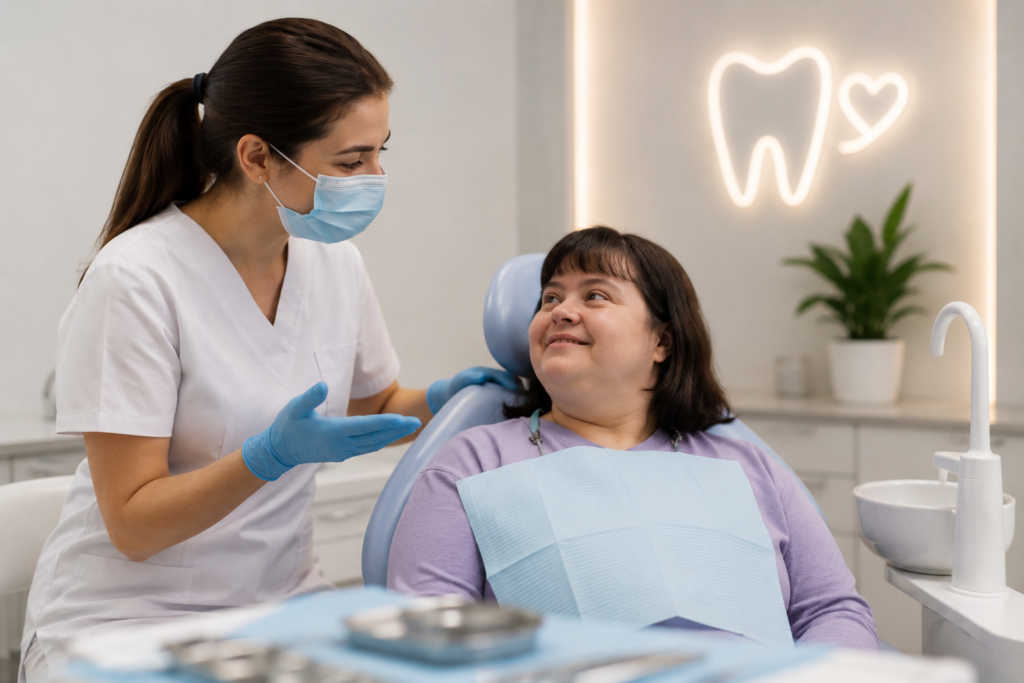
Our Approach at 21st Century Medicare Poly Clinic
At 21st Century Medicare Poly Clinic, we built our special needs pediatric dentist program because families told us they were tired of starting over at every stage of life. Our team includes a certified autism specialist who works directly with our dental staff to build individualized sensory plans that follow each patient from toddlerhood into adulthood. If you have been searching for a pediatric dentist autism care that actually adapts to your child rather than the other way around, we would like to meet your family. Book a getting-to-know-you visit with us today and experience truly dentist autism friendly care for yourself.
Frequently Asked Questions
1. At what age should a child with autism have their first dental visit?
Around age one is standard, though an earlier introductory visit with no treatment planned can help build comfort first.
2. What is a certified autism specialist, and why does it matter in dentistry?
It is a professional trained specifically in autism behaviors and sensory needs, which helps guide clinical decisions standard dental training does not cover.
3. How do I find a pediatric dentist autism families in my area actually recommend?
Ask about sensory accommodations, staff training, and whether the practice offers desensitization visits before booking.
4. Is sedation always necessary for autistic patients?
No. Many manage well with behavioral techniques alone, and sedation is reserved for complex procedures or high anxiety cases.
5. What makes an office genuinely autism friendly rather than just claiming to be?
Documented sensory accommodations, trained staff, flexible scheduling, and willingness to adjust based on the child’s specific triggers.
6. Do autistic adults need a different kind of dental care than autistic children?
The core sensory principles stay the same, but adult care should account for larger procedures and continuity of sensory notes from childhood.
7. What should I bring to help my child’s first appointment go smoothly?
Comfort items, noise-cancelling headphones, a favorite fidget toy, and any visual schedule already used at home.
8. How does a special needs pediatric dentist handle a child who cannot sit still?
Shorter treatment segments, scheduled breaks, movement allowances, and gentle physical support tools used only with the family’s consent.
9. Can dental anxiety in autistic patients improve over time?
Yes. Consistent visits with the same provider often reduce anxiety significantly over months, even for patients who struggled at first.
10. Does insurance typically cover specialized autism-friendly dental care?
Coverage varies by plan and provider, so confirm details directly with the clinic and your insurer before booking sedation-related procedures.
Also Read : Dental Anxiety in Adults with Disabilities: How Specialised Dentists Make It Possible